
The Methane Moment
How state regulators can slash landfill pollution and keep communities safe
Developed in partnership with RMI and the Subnational Methane Action Coalition
Contents
The Problem
The 2,600 municipal solid waste (MSW) landfills in the U.S. are much more than just buried piles of trash; their emissions pollute our air and water, worsen climate change, and make people sick. Fortunately, tackling landfill air pollution is a highly achievable, high-impact public health and climate win that would benefit all of us for generations to come.
Living a “Total Nightmare;” PFAs and other pollution
A toxic cocktail of pollutants like leachate, nitrogen oxides, sulfur dioxide, benzene, and volatile organic compounds (VOCs) can escape from a landfill, all of which pose direct risks to the health of those living nearby as they are associated with severe and chronic health conditions like asthma, organ damage, and cancer. Children, the elderly, and those with pre-existing health conditions are especially vulnerable to pollution from landfills.
Another category of pollutants from landfills is PFAS, which stands for perfluoroalkyl and polyfluoroalkyl substances. Those are the toxic “forever” compounds that make food boxes grease-proof, carpets stain-resistant, and jackets shed rain. As waste breaks down, landfill gas carries volatile PFAS that can escape through vents or imperfect flares. These “forever chemicals” drift downwind, adding to air pollution and exposing nearby communities. Research shows PFAS levels in landfill gas can rival or exceed those in leachate.
Landfill pollution impacts all of us, but not equally. A deeply entrenched history of environmental racism and injustice means that Black and Indigenous people, people of color, and low-income households are more likely to live in the shadow of a landfill. The same populations can face the highest structural hurdles to healthcare access, employment and safe and secure housing. It’s a vicious cycle that won’t be broken without transformational change, including how we manage waste.
In the U.S., 115.6 million people live within 5 miles of an open or closed landfill. That’s more than the populations of California, Texas, Florida, and New York combined. 43% are Black, Indigenous, or People of Color.
Hot Garbage
The problem goes far beyond the landfill’s toxic emissions into the air we breathe. Beneath America’s landfills, buried trash is literally burning, which spells catastrophe, as subsurface fires are extremely difficult to put out and wreak havoc on health. Underground “hot spots” can smolder for years, sometimes erupting into full fires. The U.S. EPA reported that 402 landfills had a “fire incident” between 2004-2010; 37% of those had more than one incident.
Bloomberg’s “America’s Hot Garbage Problem” investigative piece highlights how U.S. landfills are increasingly overheating due to chemical reactions within decomposing waste, generating extreme heat and releasing toxic gases into surrounding communities. These conditions have been linked to environmental contamination and potential health risks for nearby residents, underscoring broader concerns about waste management practices and regulation. In fact, regulations are woefully inadequate and oversight is patchy, leaving communities at grave risk.
-
"We have been living a total nightmare, unable to have any kind of life enjoyment. We cannot entertain or even sit outside because of the horrible, toxic-smelling gases and stench of rotting garbage that consumes our home on a daily basis. It is relentless, and you cannot escape it! We have real fears and concerns regarding our family's quality of life, and are now very symptomatic from breathing the toxic gas emissions from the landfill for over 4 years!"
—Gilda from Waggaman, Louisiana
-
"There is not a house in this community that has not had a person who has suffered from some type of cancer or kidney failure."
—Whitney from Roseboro, North Carolina
-
"For years, my neighbors and I have been sounding the alarm over the noxious pollution being emitted by the landfill. Myself, and my friends and family, have experienced chronic symptoms like headaches, rashes, burning eyes and constant nausea. People complain of migraines, asthma attacks, stomach issues and even reproductive problems."
—Yasmina from Val Verde, California
Federal Standards Are Inadequate, Leaving Communities at Risk
Federal landfill air emissions regulations were last updated in 2016, and have failed to keep pace with technological and scientific advances. In the U.S. system of air quality regulation, the Environmental Protection Agency (EPA) sets national minimum standards to control landfill gas emissions. These baseline requirements are established under the Clean Air Act, which directs the EPA to issue New Source Performance Standards (NSPS) and Emission Guidelines (EG) for categories of pollution sources such as municipal solid waste (MSW) landfills.
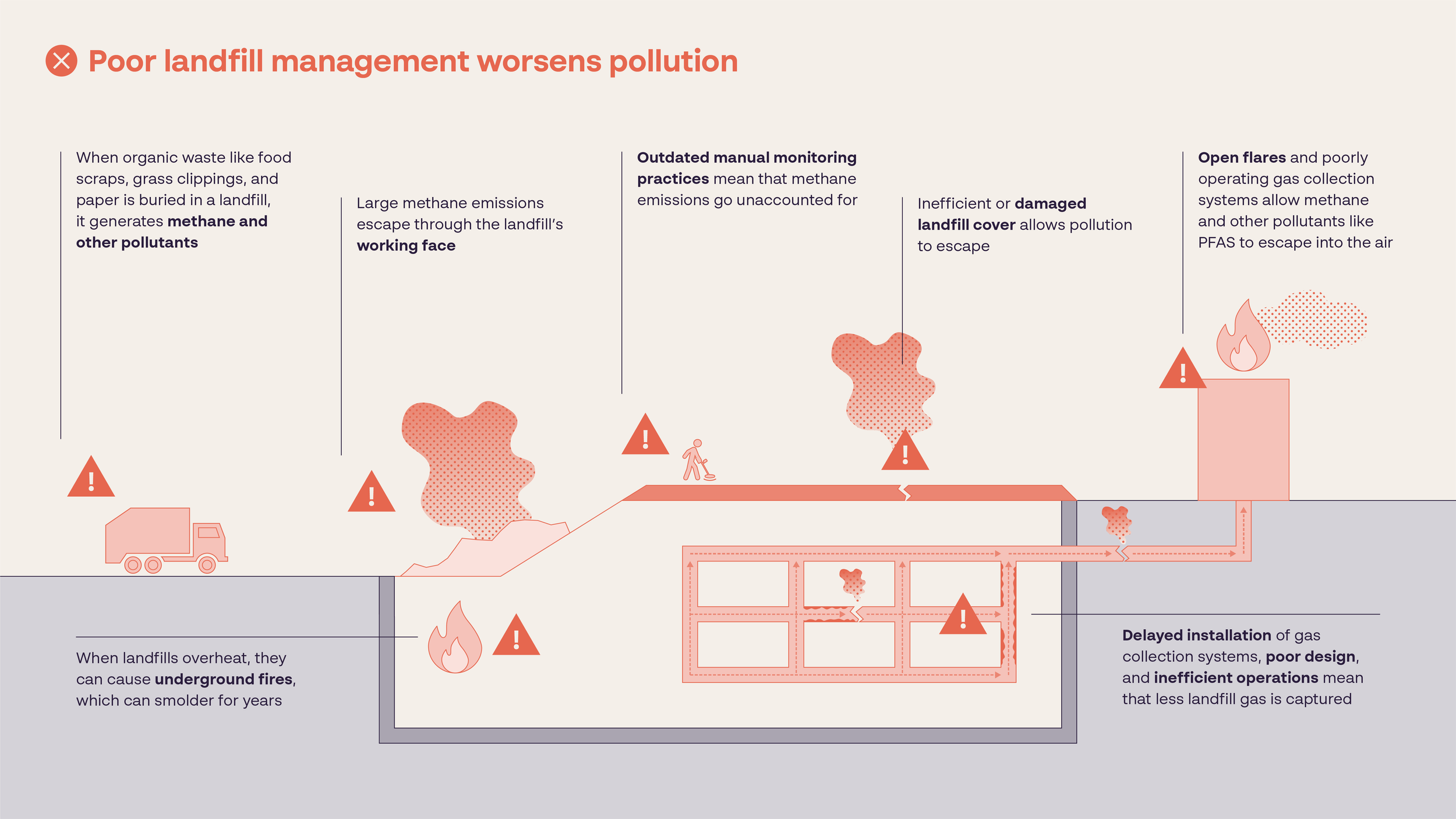
Federal regulations rely heavily on self-reporting by the landfills, weak performance standards and limited oversight. This regulatory gap has discouraged the consistent use of available tools and technologies to identify and repair leaks and effectively capture landfill gas. Chronic problems with landfill cover integrity, insufficient monitoring, and delayed installation of gas collection systems have enabled significant methane emissions and co-pollutants to escape.
The key is to capture as much landfill gas as possible, but due to flawed regulations, landfill gas collection efficiency can vary widely based on design and operational practices, such as the timing of GCCS installation in an active cell, the cover materials used to minimize surface emissions, and wellfield tuning practices. Methane detection surveys have shown some landfill facilities collect less than 30% of the methane they generate, while others collect more than 90%.
The U.S. EPA’s own enforcement program has flagged widespread noncompliance at MSW landfills in several key requirements meaning gases are not being well controlled. In September 2024,EPA issued a National Enforcement Alert concluding that many landfill operators are failing to conduct compliant monitoring and maintenance of gas collection and control systems (GCCS) — problems that directly undermine pollution control.
In fact, an analysis by Industrious Labs’ circular economy campaign (now Full Circle Future) of EPA inspection reports from 29 landfills across eight states found 711 methane exceedances over the legal threshold of 500 parts per million (ppm), with at least one methane exceedance at 96% of sites where EPA conducted monitoring. Further, at nearly half (48%) of these sites, EPA inspectors found multiple exceedances where landfill operators had previously reported few or no exceedances. For example, at the Winnebago Landfill outside Rockford, Illinois, EPA inspectors found 59 methane exceedances, 10 times more than the mere five reported by Waste Connections, the landfill operator.
Invisible Methane Super Charging Global Warming
This is a picture of the surface of the Pine Acres Landfill, in Lenox Township, Michigan. It’s owned by Waste Management, the largest waste company in the U.S. The landfill is about 370 acres, and has a gas-to-energy plant. Does anything look out of the ordinary?
In fact, there is a methane exceedance that the device is pointing to that is over 10 times the federal limit. But you cannot see it with the naked eye, and much too often, these harmful exceedances are missed. Every time a banana peel, cardboard box, apple core, or yard clipping lands in a MSW landfill, it begins decomposing into methane: a super-pollutant with about 80 times the planet-warming potency of carbon dioxide in the short term. EPA’s own data and enforcement actions make it clear: current national landfill methane standards are not delivering the emission reductions needed. In 2021, according to estimates from landfill operators provided to the EPA, municipal solid waste (MSW) landfills emitted an estimated 3.7 million metric tons of methane annually, equivalent to about 295 million metric tons of CO₂e, or the same as 66 million cars on the road.
The World Meteorological Organization recently confirmed that 2024 was the hottest year on record, and temperatures are expected to keep climbing. At the same time, methane emissions are still rising, with atmospheric levels now higher than they’ve been in at least 800,000 years. Rising temperatures are already increasing infrastructure costs, putting public health at risk, and undermining the economies of communities that rely on winter tourism. According to NOAA, the increase in both the frequency and intensity of wildfires across the western U.S. is largely driven by human-caused climate change.

Image from EPA inspection of Pine Acres Landfill, September 28, 2023.
Due to Ineffective Regulations and Widespread Noncompliance, the Problem is Worse Than Reported
It’s also important to remember that landfill methane emission estimates are just that: estimates. A growing body of research tells us that the problem is actually far worse than reported. A combination of problems, including outdated formulas and optimistic gas efficiency assumptions, means that enormous amounts of methane go unaccounted for in annual inventory estimates. With more realistic assumptions, our research found methane emissions are projected to be 63% higher than the EPA’s baseline.
Carbon Mapper and others are using methods like aircraft flyovers and satellites to find and directly detect methane emissions from landfills. This technology has identified large methane plumes lurking above over half of landfills they observed across the country. In fact, across multiple studies, measured emissions were higher on average than the bottom-up estimates reported to inventories. This means the scale of the landfill methane pollution problem is greater than previously thought, but so is the opportunity for emissions reductions.
A System Shrouded in Secrecy
Perhaps most troubling of all is how little the public is allowed to know. Landfills are required to collect vast amounts of information under federal and state regulations. Operators monitor methane levels, wellhead temperatures, oxygen and nitrogen concentrations, flare performance, gas collection efficiency, and surface emission exceedances. They submit reports documenting monitoring results, corrective actions, equipment downtime, and compliance certifications. Regulators conduct inspections and generate enforcement records.
But in most states, this information is not proactively published. The only way to obtain it is through a formal public records request — a slow, burdensome, and often costly process.
Communities living next door to landfills — the very people breathing the emissions — cannot easily access basic data about what is happening at the landfill down the road. Residents cannot see monthly wellhead monitoring reports. They cannot review surface emission monitoring results. They cannot track how often flares malfunction. They cannot easily determine whether corrective actions were taken when methane exceedances were detected.
This is not because the data does not exist. It’s because it’s not made public.
The lack of transparency creates a dangerous accountability gap. When monitoring data remains buried in agency files, self-reporting goes largely unchecked. When exceedances are not publicly visible, there is little external pressure to fix problems quickly. When inspection findings are difficult to access, patterns of noncompliance remain hidden.
Transparency is one of the most powerful and cost-effective compliance tools available to regulators. Public reporting drives better performance. It builds trust. It allows researchers to identify systemic problems. It enables communities to protect themselves. And it ensures that regulators, operators, and policymakers are accountable to the people most affected.
Other polluting industries have moved toward modern transparency. Power plants report emissions data in near real time. Industrial facilities disclose toxic releases annually through the Toxics Release Inventory. Drinking water utilities must publicly report contaminant levels.
Landfills, despite emitting millions of tons of climate pollution and hazardous co-pollutants each year, remain largely opaque. In an era when satellites can detect methane plumes from space, it is indefensible that communities cannot easily access the monitoring reports that landfills are already required to generate. Basic information — emissions data, fire incidents, monitoring results, corrective actions, inspection findings — should be publicly available online in standardized, searchable formats.
The Opportunity
There’s no question that landfills are a major source of climate pollution, public health harms, and safety risks — but the good news is, solutions are already within reach. Landfills also represent one of the most immediate and cost-effective opportunities to cut harmful emissions. States often have the authority to set the rules for how landfills monitor, capture, and control air pollution. By developing or strengthening these standards, policymakers can deliver a clear and measurable win for communities.
Just as importantly, the alternative — allowing outdated rules for landfills to persist — comes with escalating and avoidable costs. Uncontrolled toxic air pollution drives public health burdens, emergency response costs, and prolonged pollution crises that are far more expensive to address after the fact than to prevent in the first place. Take the ongoing disaster at California’s Chiquita Canyon Landfill as a stark example; in 2024, the subsurface landfill fire crisis cost the operator alone $224 million to manage, without taking into account costs to local governments, the State, and individuals.
Many states, like Oregon, California, Colorado, Michigan and Maryland, have implemented smarter landfills standards. In fact, approximately 372 MSW landfills around the country — 70 percent of which are publicly owned — are already operating under updated state-level requirements for landfill methane controls, without the cost spikes or operational disruption opponents often claim.
Although the detailed solution set is beyond the scope of this document, it’s important to note that states can address water pollution from landfills by banning the practice of allowing municipal wastewater treatment plants to accept leachate for disposal.
Protect Public Health
Updating landfill standards is a vital public health action. Analyses by states that have already undertaken updating their landfill emissions standards have found that stronger gas collection, improved cover and monitoring, and reporting requirements will not only sharply reduce methane but also reduce the toxic air pollutants and volatile organic compounds (VOCs) that harm nearby residents. These reforms directly protect communities by improving local air quality, reducing noxious odors, and preventing the underground fires that can damage landfill systems and release harmful emissions. For example, the California Air Resources Board estimates their rules would prevent about 730 metric tons of VOCs each year — roughly 1.6 million pounds of smog-forming and toxic pollution. That’s comparable to a major industrial chemical spill avoided every single year. In Colorado, updated landfill emissions standards will cut 96.3 short tons of Volatile Organic Chemicals per year, and 30.4 short tons of Hazardous Air Pollutants each year.
Fastest Opportunity to Slow Global Warming, Advance State Climate Goals
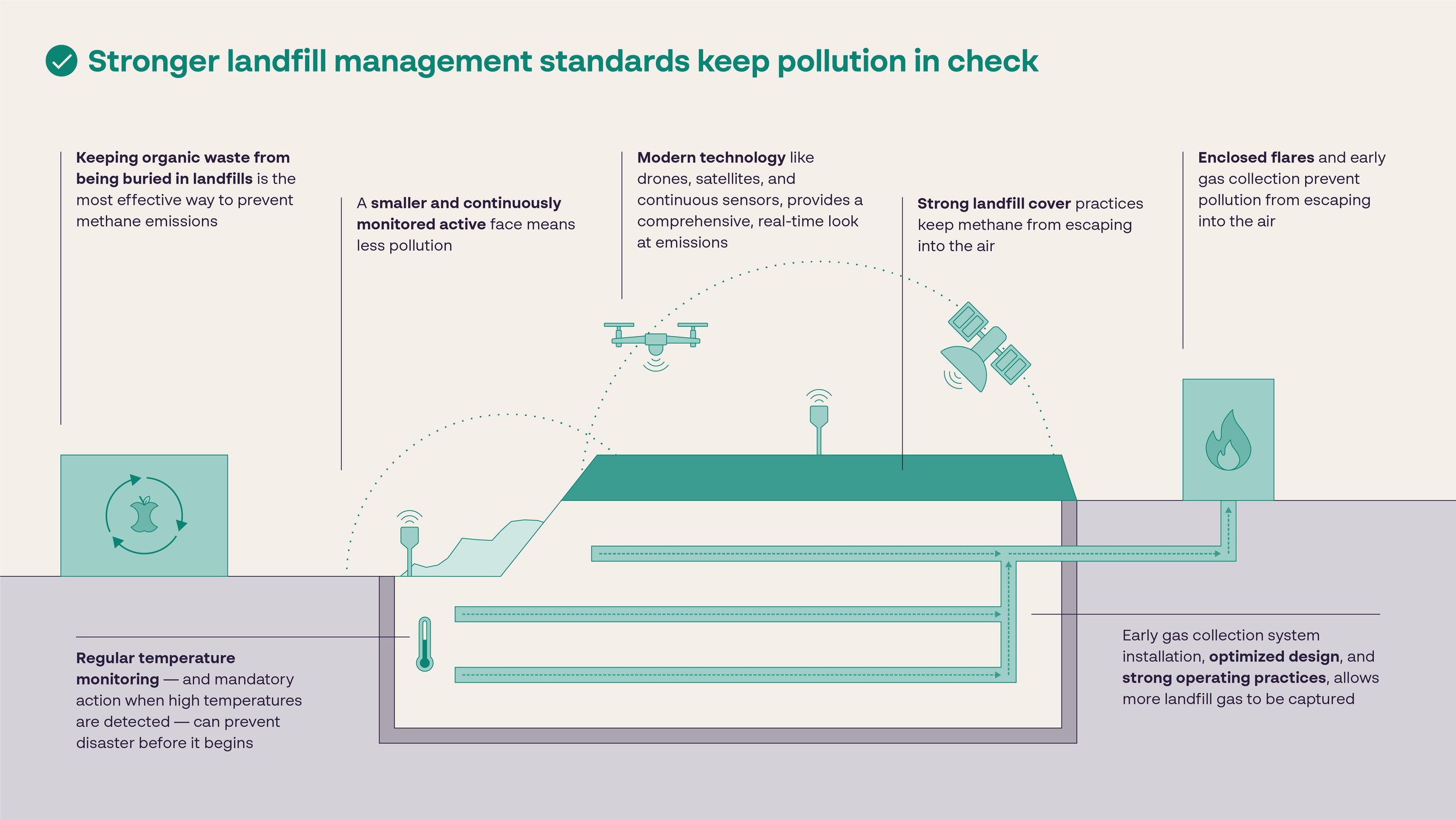
Our research shows that common-sense solutions such as improved landfill cover systems, better gas collection, and proactive leak detection could cut U.S. landfill methane emissions by 56% cumulatively through 2050. And these substantial cuts to climate pollution are possible thanks to proven technologies and practices that can be deployed now.
Failing to act locks in decades of avoidable warming, increasing the severity and cost of climate impacts in the billions of dollars that we are already paying for — from extreme heat and wildfire smoke to flooding and infrastructure damage.
States have already garnered wins on slashing harmful landfill emissions
Several states have undergone thorough analyses that demonstrate that updating landfill gas standards would deliver measurable and substantial climate and health benefits:
California: The state’s 2025 regulatory upgrades closed loopholes and strengthened gas capture and monitoring requirements, preventing roughly 17,000 metric tons of methane each year — equivalent to about 450,000 metric tons of carbon dioxide emissions. This improvement translates to avoided social costs of $56 million to $178 million over a three-year period, with further unquantified savings expected from better surface cover design that limits methane release and gas generation.
Washington: The state of Washington estimates its new landfill methane rule will prevent the equivalent of approximately 1.6 million metric tons of carbon dioxide emissions every year, using methane’s 20-year global warming impact. This reduction is a meaningful contribution toward Washington’s statutory goal of cutting greenhouse gas emissions 95% below 1990 levels by 2050.
Colorado: Colorado’s Landfill Methane Rule, Regulation 31, projects cumulative reductions of 11.2–12.4 million metric tons of CO₂-equivalent emissions by 2050, with total climate benefits valued at over $1 billion. Total compliance costs through 2050 are estimated at $209 million, yielding a healthy benefit-to-cost ratio between 4.8:1 and 5.3:1.
Maryland: Maryland estimates a 25-50% reduction in landfill gas emissions from landfills subject to the proposed regulation when fully implemented
Proven State Solutions
Leading states have already proven that stronger landfill methane standards are practical, affordable, and effective.
Clearly needed upgrades to state landfill methane emissions rules include:
Rule applicability and thresholds: Outdated thresholds exempt many smaller but high-emitting landfills, concentrating uncontrolled emissions in surrounding neighborhoods. Expanding coverage closes this loophole and prevents communities from bearing the health burden of unregulated methane and associated air toxics.
Gas Collection and Control System (GCCS) design, installation, and expansion: Methane and hazardous co-pollutants are released almost immediately after waste is buried, yet federal rules delay gas collection for years. Earlier installation and continuous expansion into all areas of the waste mass prevent avoidable pollution during the most emission-intensive phase of landfill operation.
GCCS operation, control devices, and fire prevention: Poorly operated or weakly maintained systems leak gas, increase fire risk, and expose workers and nearby residents to harmful emissions. Stronger operational, efficiency, and maintenance standards protect both public health and site safety while delivering real emissions reductions.
Energy projects: Clear standards are needed to ensure these systems actually reduce pollution rather than masking ongoing exposure.
Landfill cover management: Landfill cover practices fail communities when methane and co-pollutants leak through cracks
Methane monitoring, reporting, and enforcement: Increased coverage and frequency of monitoring, use of modern and effective detection technologies, paired with public transparency and enforceable corrective action are essential to protect communities and ensure emissions reductions are real.
States Have Acted to Protect Residents and the Climate
The EPA sets the floor, not the ceiling, when it comes to state landfill air emission regulations. States often retain broad authority under their own state statutes to adopt stronger rules to protect public health, reduce greenhouse gases, and ensure cleaner air for their residents. States can create their own rules independent of federal standards. That flexibility is crucial, because EPA’s current landfill standards lag far behind both technology and science. Thankfully, a number of states have already stepped up to fill the gap — demonstrating that modern monitoring, faster and more comprehensive gas collection and stronger controls are practical today.
States are already leading, demonstrating that stronger applicability thresholds, tighter surface methane standards (including integrated limits), earlier and more comprehensive GCCS requirements, fire-prevention operating standards, robust control-device performance, and tough reporting and enforcement are achievable right now.
The Solution Set
-
Rule Applicability
Why many high-emitting landfills escape basic federal standards to control emissions
-

Gas Collection System Installation
Getting pipes in the ground in time to capture harmful gases
-
Gas Collection System Operations
Making gas collection actually work
-
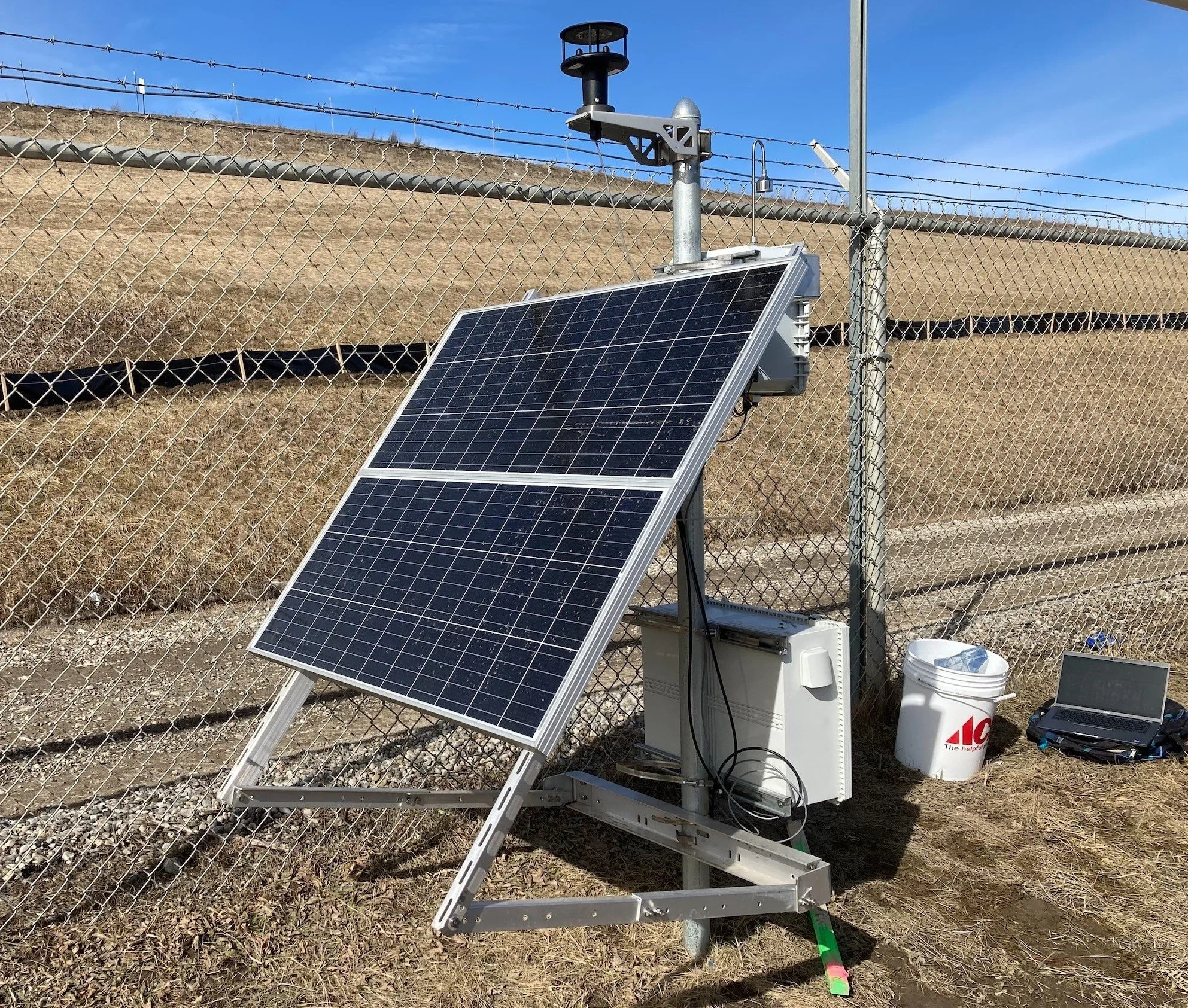
Methane Monitoring
Embracing modern technology to find and control methane leaks
-
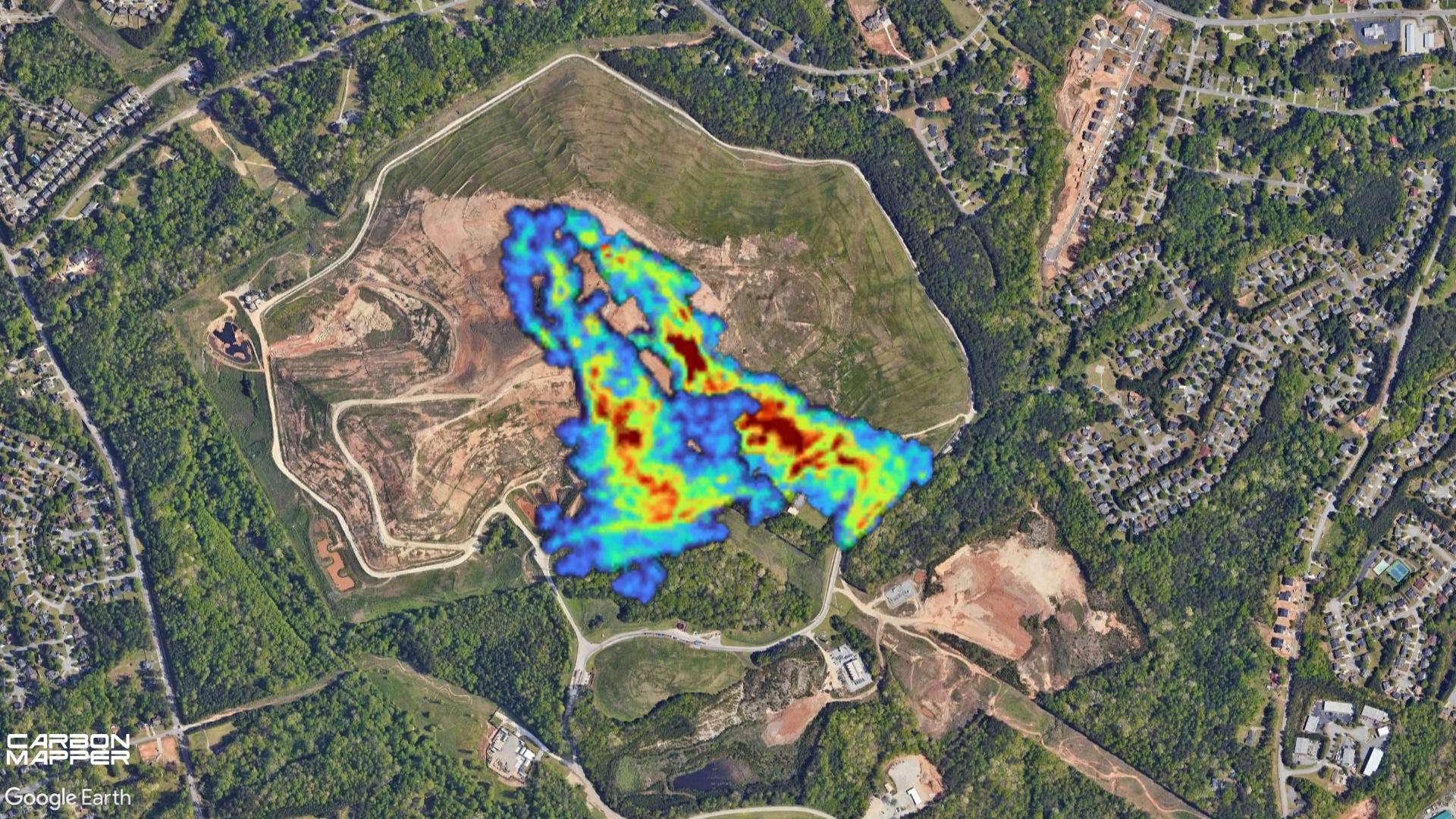
Remote Sensing
Using modern technology to find methane from space
-
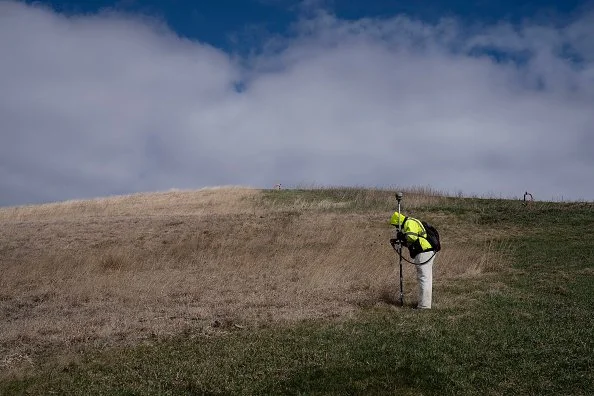
Responsible Gas Management
Protecting public health through reliable combustion and treatment of recovered gas
-
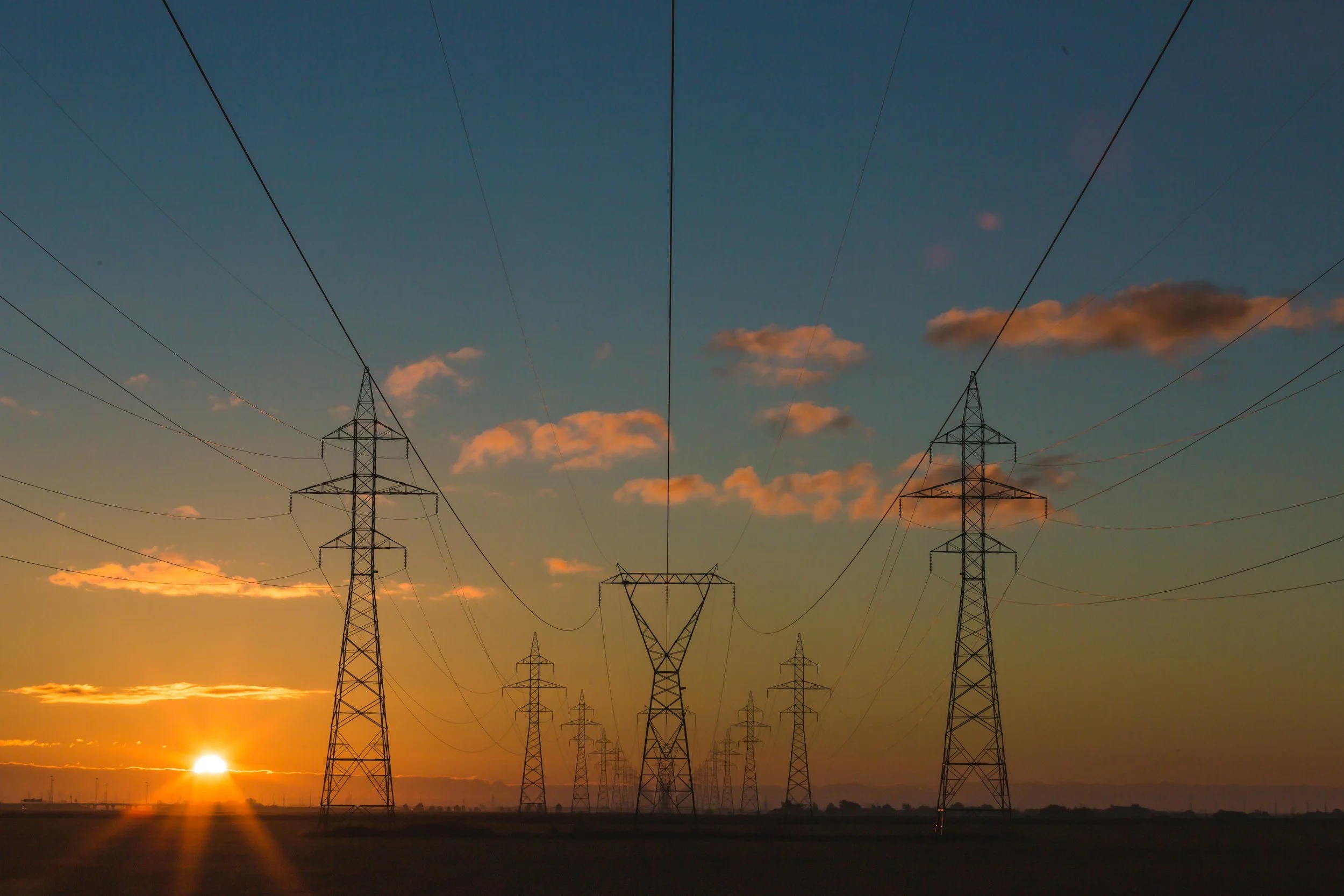
Oversight for Landfill Gas-to-Energy
Avoiding unintended negative consequences of landfill-gas-to-energy projects
-
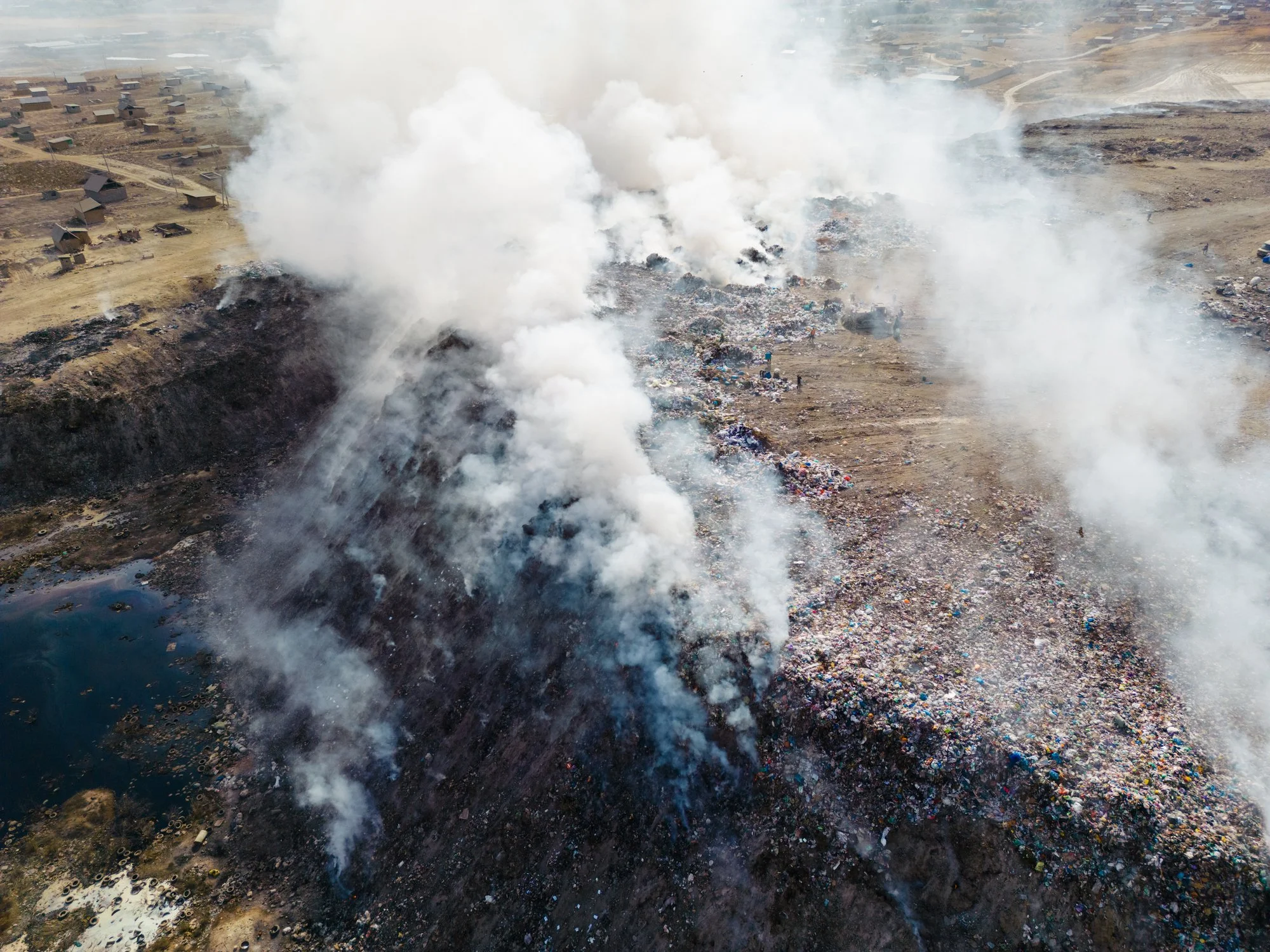
Fire Prevention and Mitigation
Keeping communities safe from preventable disasters
-

PFAS Mitigation
Tackling “forever chemicals” in our air
-
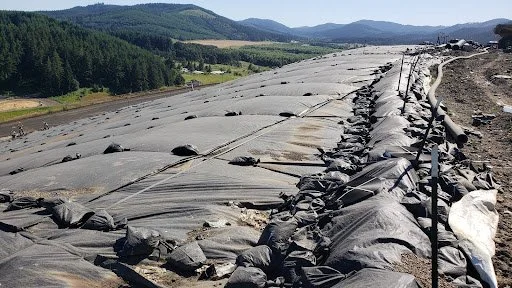
Smart Landfill Cover
Minimizing emissions through effective cover materials and practices
-
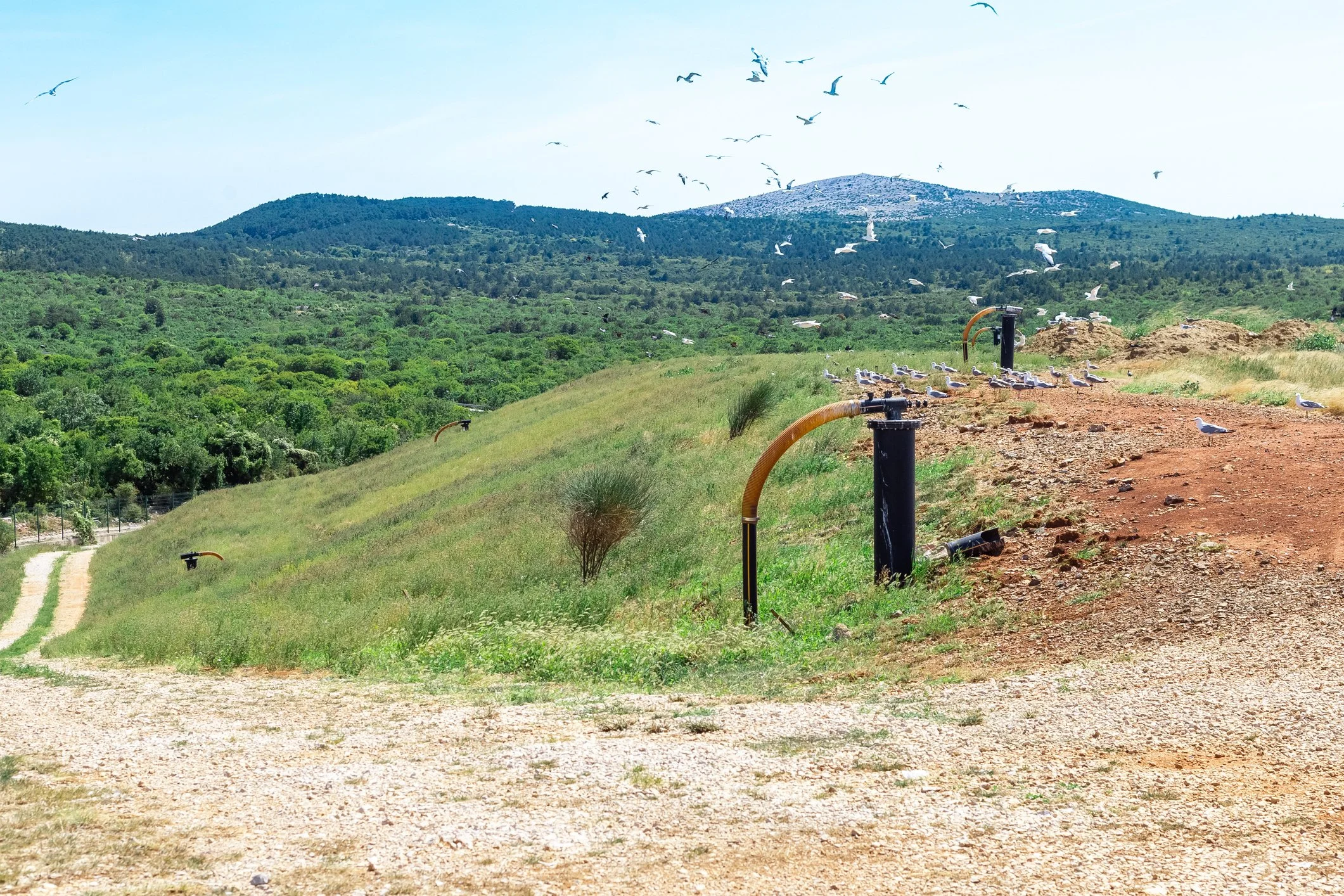
Gas Capture and Collection System Shutdown
Strengthening rules for when and how gas collection is paused
-
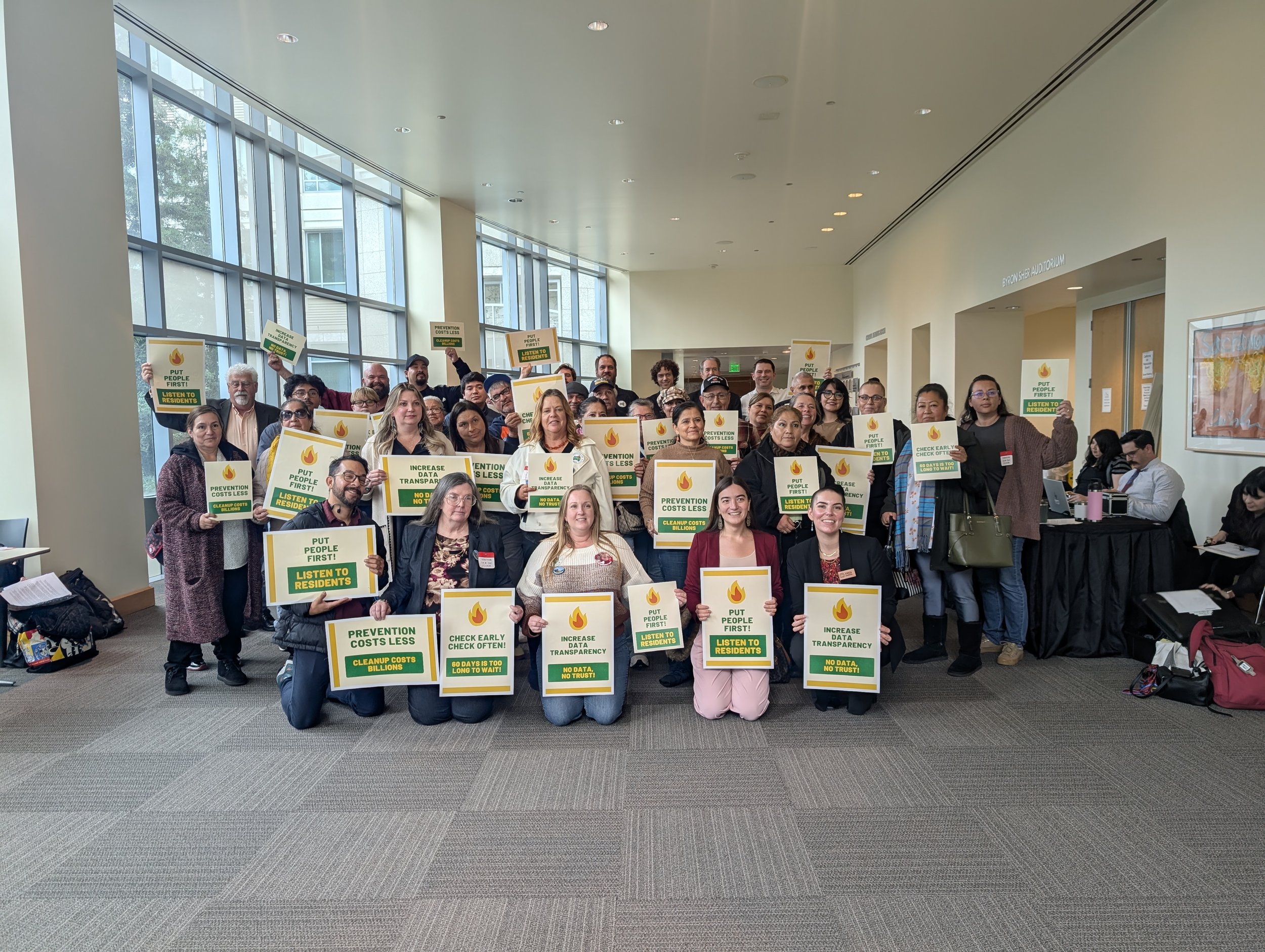
Transparency and Accountability
Holding landfill operators accountable to nearby communities
-

Complementary Policies
Keeping waste out of landfills
Big Bang For Your Buck
Many states have upgraded minimum emissions mitigation requirements for landfills, through lengthy and comprehensive processes that included extensive industry and stakeholder input. Across those states, they have found massive benefits, for a comparatively low cost.
The state of Colorado’s analysis found that every $1 spent on improving landfill practices yields $5 in public health benefits. This is a high-return investment that will pay off for decades. Colorado’s landfill methane rule delivers comparable yearly emission reductions as their oil and gas industry standards, and costs up to 6.6 times less.
The California Air Resources Board’s analysis shows that the proposed landfill methane rule updates would cost, across all 100+ landfills, about $12.5 million in the first year, and roughly $12.3 million per year afterward. That adds up to about $0.31 per person, per year — a small price for such a big benefit.
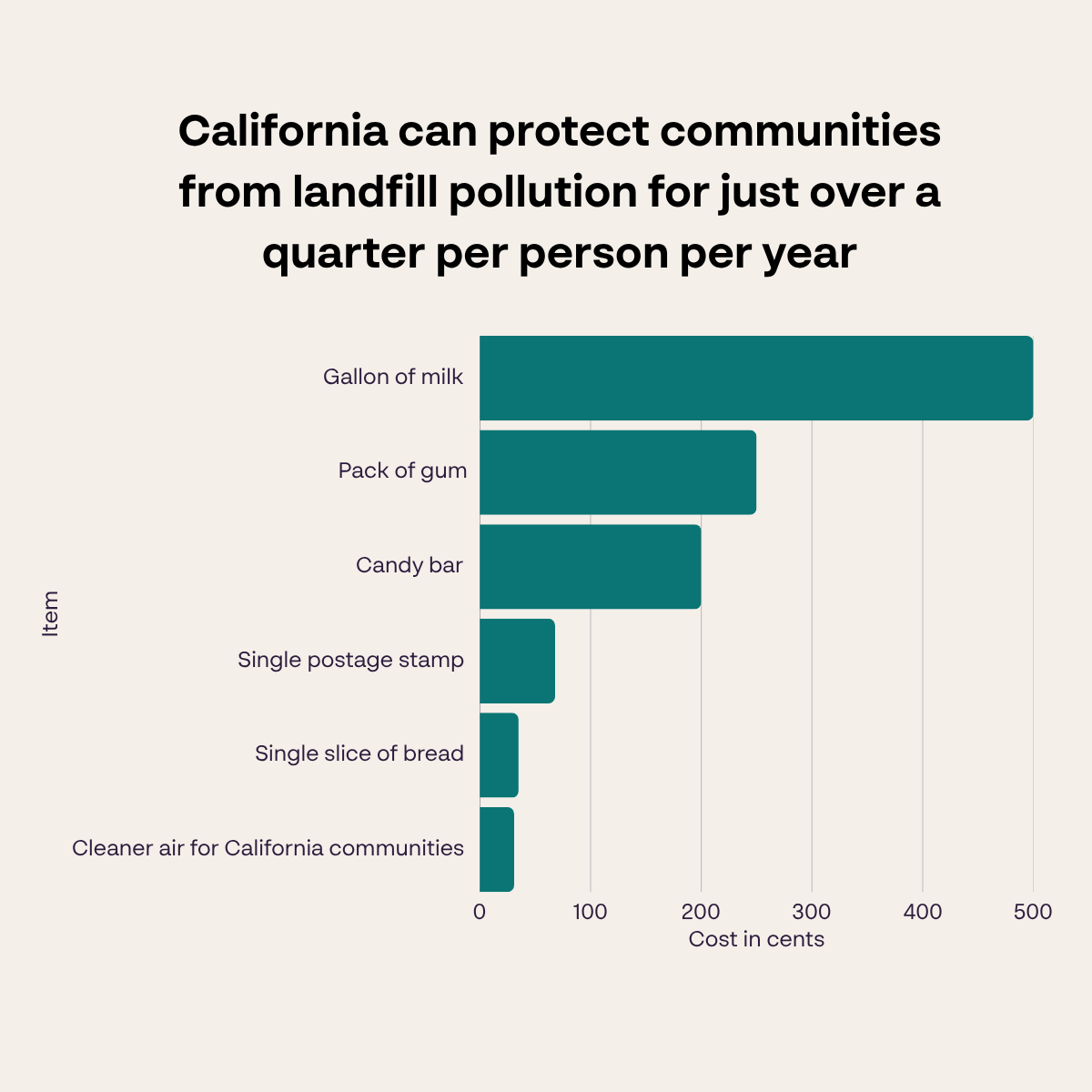
Much of the practices for better managing methane emissions from landfills today are about adjusting practices to achieve better results - for example, landfill operators already install cover on the landfill, but they aren’t optimized to limit methane emissions. Landfill operators are already putting pipes in the ground to capture methane, just not fast enough. Many landfill operators are already flying a drone over a landfill periodically (to measure landfill volumes, topographical mapping, etc), it just doesn’t have a methane sensor attached to it.
Deploying methane-detecting drones or automated wellhead tuning systems that improve methane gas collection can actually save landfill operators time and money while improving worker safety. These technologies protect landfill technicians from dangerous field conditions, while freeing up time to make data-informed design and operational improvements to more proactively/effectively manage their sites.
Many of the solutions being proposed, like better gas collection systems and leak monitoring, are already used across the industry and can even generate revenue when methane is captured and used. Plus, the costs of inaction — higher healthcare bills, emergency climate responses, and long-term damage to our environment — are far greater. These are common-sense, cost-effective updates that benefit everybody. Upgrading the methane destruction rate of a flare and installing a gas collection system earlier would only cost about as much as a cup of coffee per ton of CO2e reduced.
Investing in solutions now can save billions down the road in disaster relief, healthcare costs, and other huge expenses associated with climate change.