
Gas Collection System Operations
Making gas collection actually work
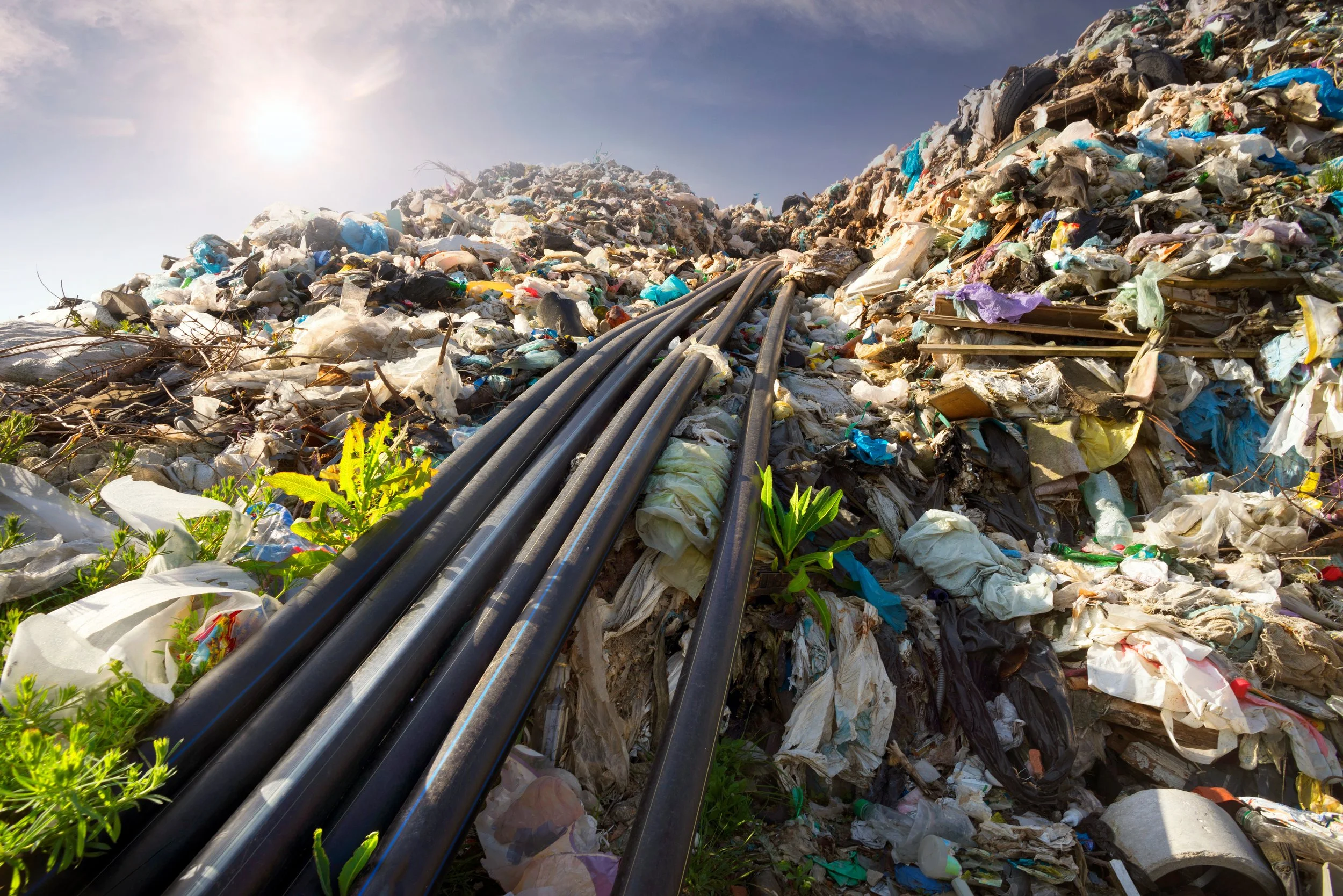
A sobering reality is that installing a landfill gas collection and control system (GCCS) in a landfill is not the finish line but the starting point. If the GCCS does not actually work and perform at a high gas collection efficiency, it’s game over.
Unfortunately, many systems fail to perform as designed because monitoring and maintenance requirements are flawed, missing key issues like making sure liquid doesn’t accumulate in pipes. Worse, current regulations rely on an honor system. As a result, liquid blockages, gas collection system downtime and malfunctions often go undetected for months, allowing fugitive emissions to persist.
The Problem: Gas Collection Systems Perform Poorly, with little Oversight
Gas collection efficiency at landfills can vary widely. Direct measurement surveys have shown some facilities collect less than 30% of the methane they generate, while others collect more than 90%. In Maryland, reported collection efficiencies in 2017 ranged from 5% to 95%, with an average efficiency of 59%. Nesser et al. (2024) compared LMOP and GHGRP data with satellite methane observations for 38 landfills, revealing an average gas recovery efficiency of 50% (ranging from 33% to 54%). At the six facilities among the top 10 methane- producing landfills, the study found a mean gas recovery efficiency of only 33%.
EPA’s enforcement found chronic compliance issues, detailing a “failure to properly design, install, operate, and maintain the gas collection and control system.” Worse, even “compliant” sites may leak large amounts of methane because gas collection wells are flooded, shut off, poorly balanced, with infrequent tuning or monitoring. Manual checks performed monthly or quarterly cannot detect transient problems—vacuum losses, positive pressure events, or high liquid levels—that cause intermittent venting between inspections. Federal rules only require landfill gas systems to be checked once a month and gas components. Incredibly, federal rules do not require leak detection and repair on components. Yet components like valves, pumps, and connectors can leak methane, volatile organic compounds, and hazardous air pollutants. Additionally, the practice by landfills of leachate recirculation, intended to accelerate waste decomposition, increases moisture and methane generation rates, often overwhelms under-designed GCCS infrastructure.
It does not have to be this way. Real-time monitoring, proactive maintenance and automated controls fix this problem by constantly tuning the system and catching issues immediately.
The Fix: Keep Liquid out of Pipes, Data-Driven Oversight and Modern Controls
Core operational improvements recommended by EPA and often enacted in leading states include:
Continuous vacuum and pressure monitoring to confirm wells are actively collecting gas (California, 2025 LMR).
Automated wellhead tuning systems are required, particularly at landfills with persistent violations, energy projects, or of a certain size threshold. For example, automated wellhead tuning developed by LoCI Controls, uses sensors that record flow, temperature, pressure, and gas composition at each well up to 720 times per month and automatically adjust vacuum valves. Colorado’s 2025 Regulation 31 and California’s Landfill Methane Rule recognize such systems as a best practice for maintaining compliance and minimizing positive pressure events.
Monthly measurement of methane, CO₂, and O₂ at each wellhead (California, 2025 LMR).
Component leak detection and repair: A number of states have adopted leak detection requirements, to ensure that gas collection equipment isn’t venting methane (Maryland 2023, Washington 2024, California, 2010).
Liquid level monitoring and removal in gas wells and laterals to prevent flooding and blockage which impedes gas collection (Michigan statute Part 115, 2023, California 2025 LMR).
Flow-rate recording at 15-minute intervals at all control devices, with alarms if flow varies more than 20% over a 3-hour period (California, 2025 LMR).
Limits on system downtime and corrective action protocols for any deviation from negative pressure or temperature limits (California, 2025 LMR).
Modern landfill management uses automation to maintain system performance around the clock. EPA’s Increasing LFG Collection Rates White Paper calls out wellhead tuning systems as a key technology for reducing methane losses and responding to changing atmospheric conditions.
Technology Snapshot: Automated Wellhead Tuning Systems
What it is: Automated wellhead tuning, such as the LoCi Controls systems, uses real-time sensors and remote control valves to continuously adjust vacuum pressure and flow across a landfill’s gas wells. Each wellhead is equipped with compact sensors that track methane, oxygen, carbon dioxide, flow, pressure, and temperature, which are the key parameters for methane collection efficiency and safety.
How it works:
Sensors transmit hundreds of readings per day.
Software algorithms detects signs of underperformance or leaks, such as when vacuum drops or oxygen rises.
Valves automatically retune the wellhead, restoring optimal negative pressure within minutes.
Operators receive remote alerts for any “positive pressure” or “off-gas” events, with automated logs for compliance reporting.
Why it matters:
Automated wellhead tuning helps catch issues early and has been shown to boost overall GCCS performance and efficiency, manage safety risks from leaks, and prevent oxygen intrusion in new waste areas. EPA analysis highlights that consistent vacuum maintenance and rapid corrective action are essential to prevent fugitive methane.
Results:
Methane recovery increases 10–20%.
Fugitive emissions drop up to 50%.
Operator response time falls from days to minutes.
Automated wellhead tuning systems can increase capture rates by around 15%, turning a multi-year payback timeline into just a few months for certain landfills.
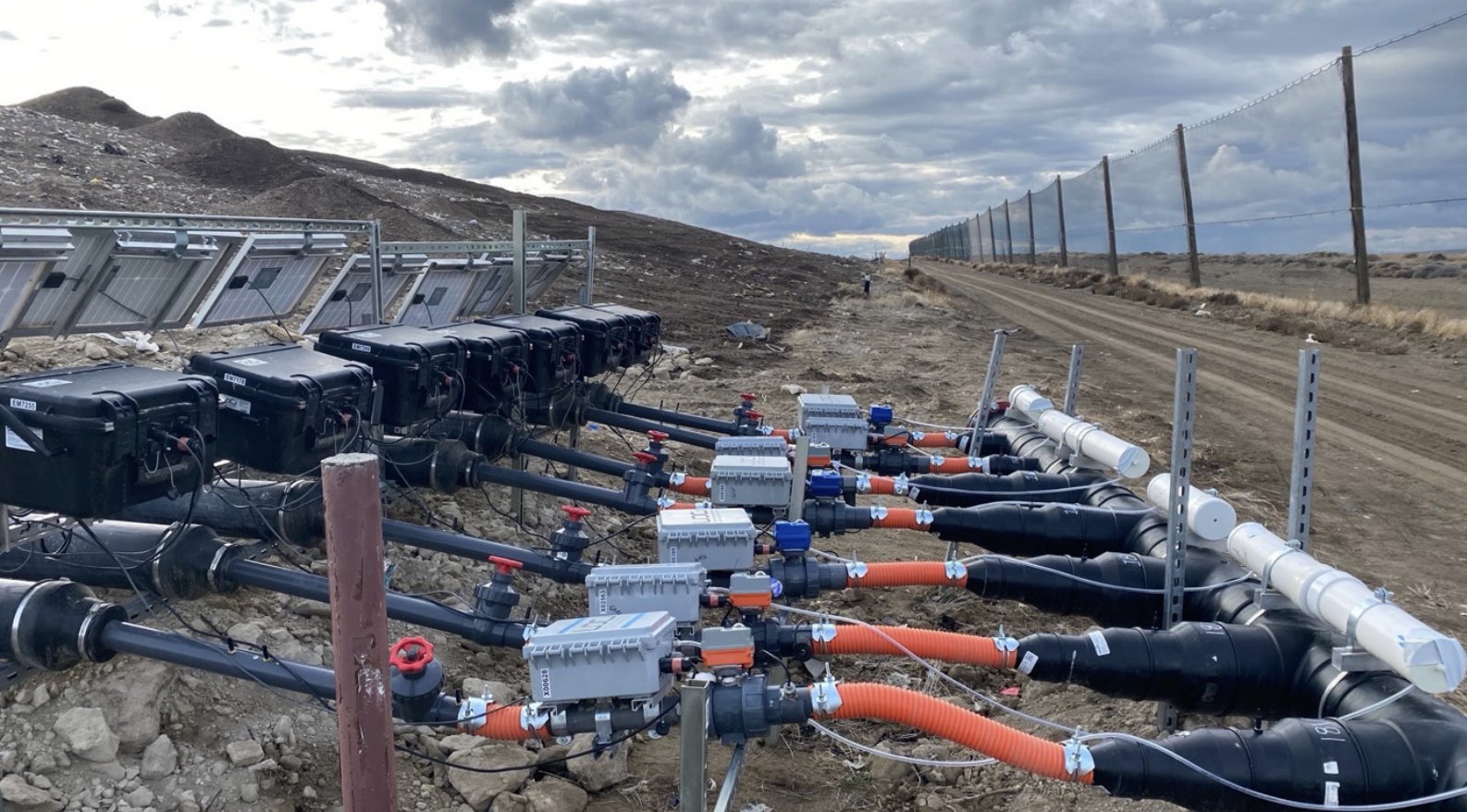
Automated wellhead tuning system at a landfill
Source: LoCi Controls
Examples of Gas Collection System Monitoring in Leading States
Maryland (COMAR 26.11.42, 2022)
Key requirements: Monthly gas composition and pressure readings; component leak monitoring every quarter; corrective action within 3 days for exceedances
Outcome: Reduces leaks, limits downtime, and improves operator accountability.
Michigan (Part 115, 2023)
Key requirements: Liquid level monitoring and corrective actions and early GCCS startup.
Outcome: Prevents flooded wells, avoids fire risk and maximizes early capture efficiency.
California (2025 LMR)
Key requirements: 15-minute flow monitoring; monthly CH₄/CO₂/O₂ measurement; continuous system vacuum, auto alarms and corrective action for > 20 % flow deviations. Liquid level monitoring requirements.
Outcome: Enables real-time troubleshooting and continuous optimization.
Colorado (Reg. 31, 2025)
Key requirements: Continuous data systems recognized; defines “Point of Noncompliance” for wells showing > 15 % positive pressure readings in 30 days.
Outcome: Encourages continuous monitoring and quick corrective action.
Costs and Benefits
Costs will vary significantly depending on site-specific factors, such as size and what has already been done at the landfill. For automated wellfield systems, costs vary depending on the amount of wellhead monitors needed. The incremental costs per wellhead can be about $7,000 in capital expenditures and $1,500 in annual operations and maintenance (baseline of 75% coverage of wellheads at a typical landfill). Automated wellfield systems add modest capital costs but can rapidly pay back by preventing gas loss and improving energy project revenue. Real-time tuning recovers gas that otherwise escapes or is flared inefficiently, improving fuel yield and compliance outcomes.
Emissions Reductions
The EPA notes that improving well monitoring frequency and eliminating liquid blockages can boost gas capture efficiency by 10–20 % across the system. Automated wellfield tuning technologies like LoCI’s have documented emission reductions of similar magnitude, by maintaining optimal vacuum continuously and catching issues before leaks develop.
Industry Claim: Automated and continuous monitoring are prohibitively expensive.
Fact: Payback periods can be short, thanks to improved gas collection. Automated wellfield systems reduce manual labor and prevent costly violations or shutdowns.
Industry Claim: Early action or high-frequency gas collection tuning could destabilize gas quality for energy projects.
Fact: Real-world data shows that early gas collection combined with real-time control actually improves gas quality by maintaining optimal vacuum and reducing oxygen intrusion.