
At a time when Detroit-area landfills are coming under significant fire, local leaders are demonstrating what an alternative could look like.
For example, the Arbor Hills Landfill near Northville has a long record of trouble: hundreds of odor complaints, multiple lawsuits, a 2019 state PFAS designation, and a 2022 settlement that cost owner GFL Environmental $355,000 in fines for odor, leachate, methane and temperature violations. Despite that history, GFL is now seeking to expand the landfill by roughly 90 acres.
Arbor Hills isn't unique: Woodland Meadows Landfill in Van Buren Township has requested permission to run dozens of landfill gas wells at temperatures above federal limits; Riverview Land Preserve is known locally as “Mount Trashmore,” with residents complaining of foul odors and rodents. All told, Michigan is home to 60 municipal solid waste landfills, and roughly one in four residents lives within five miles of one, often in communities already carrying more than their share of pollution burden.
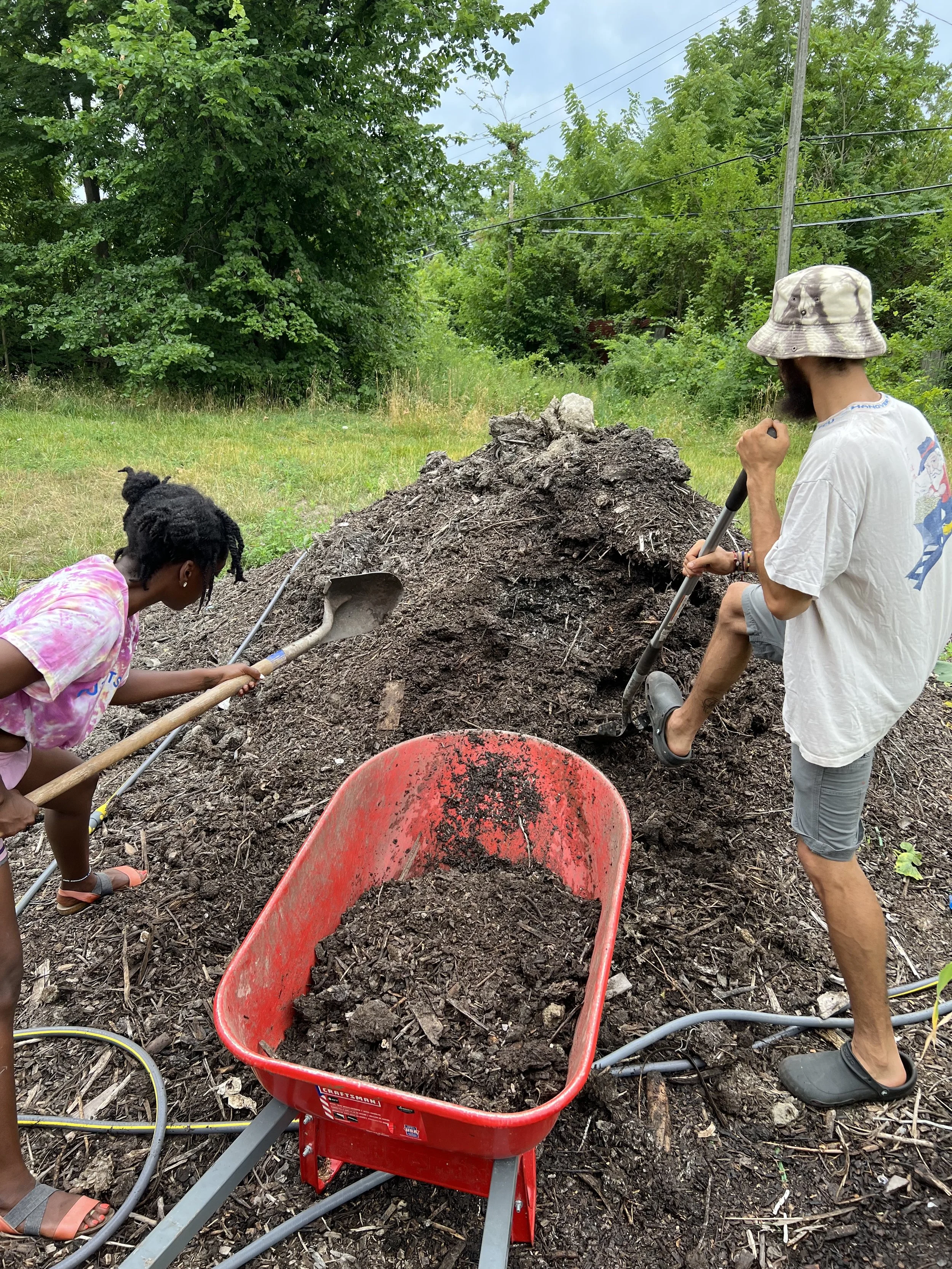
Community composting efforts at Sanctuary Farms. Photo credit: Sanctuary Farms.
But a new report shows there's a different path. The Detroit Community Composting Collective Project (DCCCP), a coalition of 6 Detroit-based food, waste and environmental justice organizations (Sanctuary Farms, Detroit Black Community Food Sovereignty Network, Detroit Black Farmer Land Fund, Detroit Food Policy Council, Sacred Spaces, and Oakland Avenue Urban Farm), whose primary objective is to advance local organics diversion in Detroit through policy and practice, just released findings from a fall 2025 pilot. This pilot trained more than 100 Detroit residents in backyard, community, and commercial composting.
The results were strong. Seventy-five residents completed a three-workshop backyard composting curriculum, diverting an average of 6.3 pounds of food waste per participant, per week — roughly 2,400 pounds total, all of it kept out of a landfill. Forty-two more residents signed up for community composting, dropping food scraps at partner farms a combined 131 times over the pilot. Seven urban farms, including Sanctuary Farms, D-Town Farm, and Oakland Avenue Urban Farm, received training in on-site composting; the compost those farms produced from community scraps hit a 59% reduction in volatile solids, well above the threshold for mature, usable compost, and outperformed plain water in boosting seed germination.
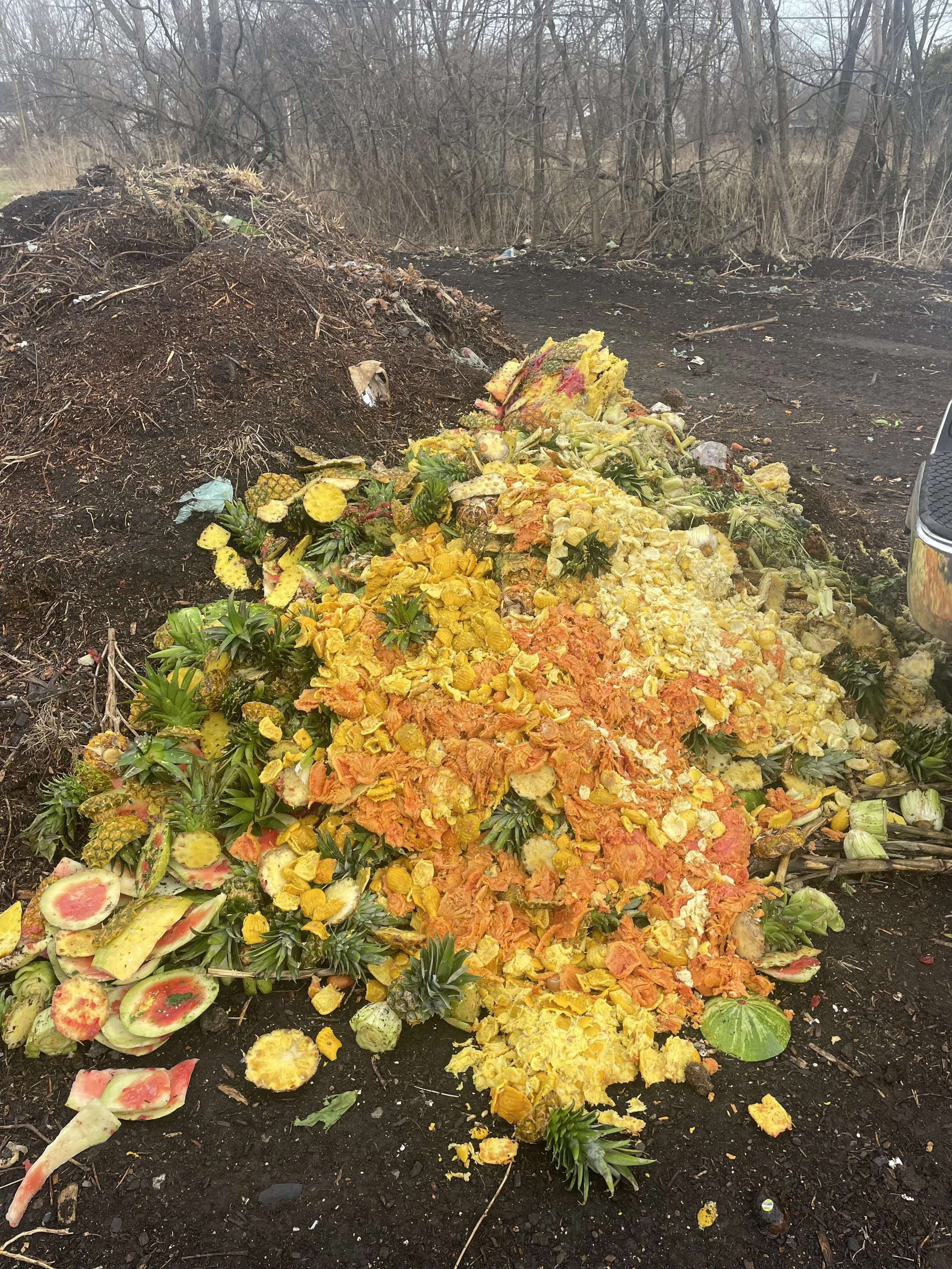
Fresh fruit and produce drop-off at Sanctuary Farms. Photo credit: Sanctuary Farms.
Just as telling was the demand. Across the backyard and community tiers, 218 Detroiters submitted interest forms, far more than the pilot had capacity to serve. Among community composters surveyed after the pilot wrapped, every single respondent said they planned to keep composting going forward.
The pilot also explored the commercial-scale end of Detroit’s composting ecosystem, examining how larger compost operators can complement backyard and community-based systems by processing volumes of organic material that cannot feasibly be managed at the neighborhood scale. Through engagement with commercial composters and analysis of infrastructure and market needs, DCCCP demonstrated that a truly citywide system will require multiple interconnected scales of composting, from residents and urban farms to larger processors capable of handling substantial volumes of food and organic waste.
The report doesn't stop at the pilot's results. It lays out a specific policy roadmap which advocates for the implementation of a citywide community-led, decentralized, and multi-scale composting system. More specifically, this roadmap invites the City of Detroit to:
formally define composting as its own land use, as well
require high-volume food waste generators like restaurants and event venues to compost,
fund public education and a municipal Compost Coordinator role, and
establish drop-off sites across the city.
Those recommendations line up with a goal the city has already set for itself: raising Detroit's recycling and composting diversion rate from its current 4-8% to 30% by 2029.
Food scraps are the single largest waste product going into Michigan's landfills by weight, generating more methane than almost any other material buried alongside it. And right now, every county in Michigan, including Wayne, is rewriting its solid waste management plan, an open door for the kind of community-led model DCCCP just tested.
