
Coffin Butte Landfill was supposed to control its pollution. Oregon’s DEQ has a chance to make sure it finally does
For decades, Oregon law has been clear about one thing: landfills are required to find and control harmful emissions. That’s not a suggestion. It’s a legal obligation meant to protect nearby communities from dangerous air pollution and to limit climate-harming methane from escaping into the atmosphere.
At Republic-Services owned Coffin Butte landfill in rural Benton County that promise has fallen short.
“Many times each year, particularly in the winter months, we are affected at our house and while attending school in Adair Village, by an oppressive stench, one that affects our daily living and activities. It causes headaches, eye irritation, and throat burning - which limits our outdoor activities, ability to perform property maintenance, and often makes me concerned for the safety of the children at school, transiting between classroom buildings, during outdoor recess, and during sports practices. Although air quality concerns are not a daily occurrence, the impact of drinking water contamination is a constant reminder of our toxic neighbor.
”
Coffin Butte landfill is one of the largest sources of industrial methane pollution in Oregon. Almost a million tons of garbage a year are trucked to the landfill from outside Benton County. Multiple investigations, including federal inspections and independent aerial surveys, have found serious methane leaks at the site—some at explosive levels—despite the landfill operating under permits and rules that require emissions control. Methane plumes have been detected over the landfill from the air, while on-the-ground monitoring has repeatedly missed them.
This gap between what the law requires and what’s actually happening on the ground is exactly why Oregon lawmakers passed SB 726 earlier this year.
Now the spotlight shifts to the Oregon Department of Environmental Quality (DEQ) and the Environmental Quality Commission.
A law on the books and a rulemaking moment that matters
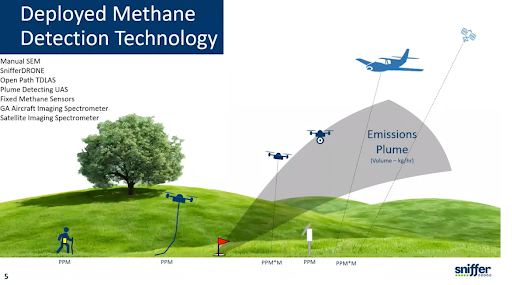
SB 726 directs Oregon regulators to modernize how landfill emissions are detected and addressed at Coffin Butte landfill. Instead of relying almost entirely on outdated, manual methods — quarterly walks with handheld sensors that avoid large portions of the landfill — DEQ is now required to write rules that allow and require more effective detection technologies. This could include tools like drones, aerial surveys, and other remote monitoring systems that can see what traditional methods miss - remember, the miss rate can be 80%!
This is about ensuring landfills actually meet the obligation they’ve had all along: to locate methane leaks and fix them.
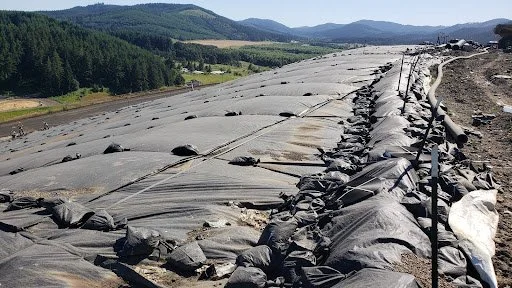
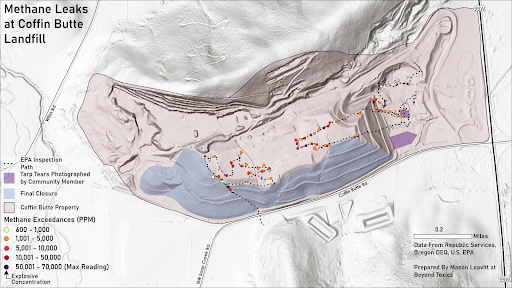
At Coffin Butte, this matters deeply. EPA inspections have documented widespread exceedances at the landfill, including dozens of locations where methane levels were far above legal limits. Some readings maxed out monitoring equipment altogether, indicating significant accumulations of flammable gas beneath landfill covers at explosive levels.
Advanced detection technology has already shown it can identify these kinds of failures quickly and accurately — often pointing directly to cracks in cover, disconnected wells, or malfunctioning gas systems that operators can repair. When leaks are found, they can be fixed. When they’re invisible, they continue harming people and the climate.
A community that has been fighting for years
None of this is new to the people who live near Coffin Butte.
For years, a group of residents — the Valley Neighbors for Environmental Quality and Safety (VNEQS) — have been sounding the alarm—organizing neighbors, testifying at hearings, reviewing permit documents, and pushing back against repeated efforts to massively expand the landfill - raising concerns about methane emissions, air quality, groundwater contamination, and the sheer volume of out-of-county waste being dumped in a rural community already bearing the environmental burden.
Their work has helped bring nationwide attention to Coffin Butte and was the driving force behind SB 726.
Despite all of these documented problems and a unanimous decision by the county planning commission to turn down Republic’s expansion proposal, Benton County Commissioners recently voted to green light the expansion. VNEQS has appealed the decision, and the stakes could not be higher. You can donate to support their grassroots efforts.
Oregon is falling behind—and doesn’t have to
Other states are moving faster. Colorado has adopted and is further strengthening landfill methane rules that explicitly incorporate advanced monitoring tools, require faster responses to detected super emitter plumes, and closes loopholes that allow emissions to go unaddressed. California did the same.
Oregon’s landfill gas rules, though better than substandard federal requirements, still lean heavily on approaches that federal inspectors have flagged as incomplete and unreliable. In a nationwide enforcement alert, the U.S. EPA cited widespread failures in landfill methane monitoring, including skipped areas, improper techniques, and missed pollution sources—all problems that advanced technologies are designed to solve.
DEQ now has a clear opportunity to close this gap at Coffin Butte landfill, to start. Through SB 726 rulemaking, the agency can require monitoring that covers the entire landfill surface, including areas that are unsafe or impractical to walk. It can require that detected emissions are reported clearly, mapped precisely, and repaired promptly. And it can give communities access to better information about what they’re breathing.
DEQ should not stop at Coffin Butte. This case exposes a statewide problem: landfill emissions rules that haven’t kept pace with what we now know — or what we can now measure. Since Oregon updated its landfill rules in 2021, Maryland, Colorado and California have upgraded their standards. It’s time for the state to modernize its landfill regulations across the board, ensuring that every community benefits from monitoring systems and technology that actually find and control pollution.
Communities deserve clean air and waster
Landfills like Coffin Butte don’t just emit methane. They release a mix of hazardous air pollutants that travel with landfill gas and affect nearby neighborhoods, causing odors, headaches, respiratory irritation, and ongoing concerns about health and safety. People living near the landfill have been raising these issues for years while the landfill has continued to expand and accept waste from far outside the county
Better monitoring won’t solve every problem overnight. But it’s a necessary first step toward accountability.
If landfills are meeting the law, stronger monitoring will show it. If they’re not, regulators — and the public — will finally have the information needed to act.
What happens next
DEQ’s upcoming rulemaking will determine whether SB 726 delivers on its promise or becomes another missed opportunity. The agency can choose to write strong, clear rules that reflect today’s science and technology, or it can preserve a system that has already failed to protect communities at places like Coffin Butte.
Oregon law has always required landfills to find and control harmful emissions. Now DEQ has the chance to make that requirement real.
Communities are watching. And they deserve nothing less.
