
Partner Spotlight: Sanctuary Farms
Something we often say at Full Circle Future is that organic waste is one of the most solvable crises we face. That might seem like a bold claim, but what makes us so sure is the many amazing groups already driving transformational change. We’re lucky enough to partner with some of them, including Detroit’s Sanctuary Farms.
Sanctuary Farms is a Detroit-based urban farm and nonprofit committed to closing the food loop and advancing environmental justice through community-rooted solutions. At the heart of their work is a robust composting initiative that diverts organic waste from landfills and transforms it into nutrient-rich soil to support regenerative farming practices. In partnership with their sister organization, Sacred Spaces, they support a decentralized composting network in Detroit.
Check out this Q&A with Sanctuary Farms cofounder, jøn kent, and take a moment to learn more about the Detroit Community Composting Collective Project (DCCCP), a coalition of Detroit-based food, waste, and environmental justice organizations working to improve access to composting.
What success or accomplishment in food waste reduction or organics diversion are you most proud of?
One of the accomplishments I am most proud of is building Sanctuary Farms into the largest community-based composter in Detroit. We’ve diverted thousands of pounds of food scraps and organic materials that would have otherwise gone to landfills, and transformed them into nutrient-rich compost that nourishes our urban farms and community gardens. Beyond the environmental benefits, we’ve created education and engagement opportunities through composting classes, partnerships with the Detroit Community Composting Collaborative Program (DCCCP), and pilot PFAS testing with the Ecology Center to ensure safe and healthy soil. This work demonstrates how local, community-driven solutions can scale to reduce waste, regenerate land, and close the food loop in Detroit.
What keeps you doing this work? Has there been a moment or story that reinforced why this is important to you?
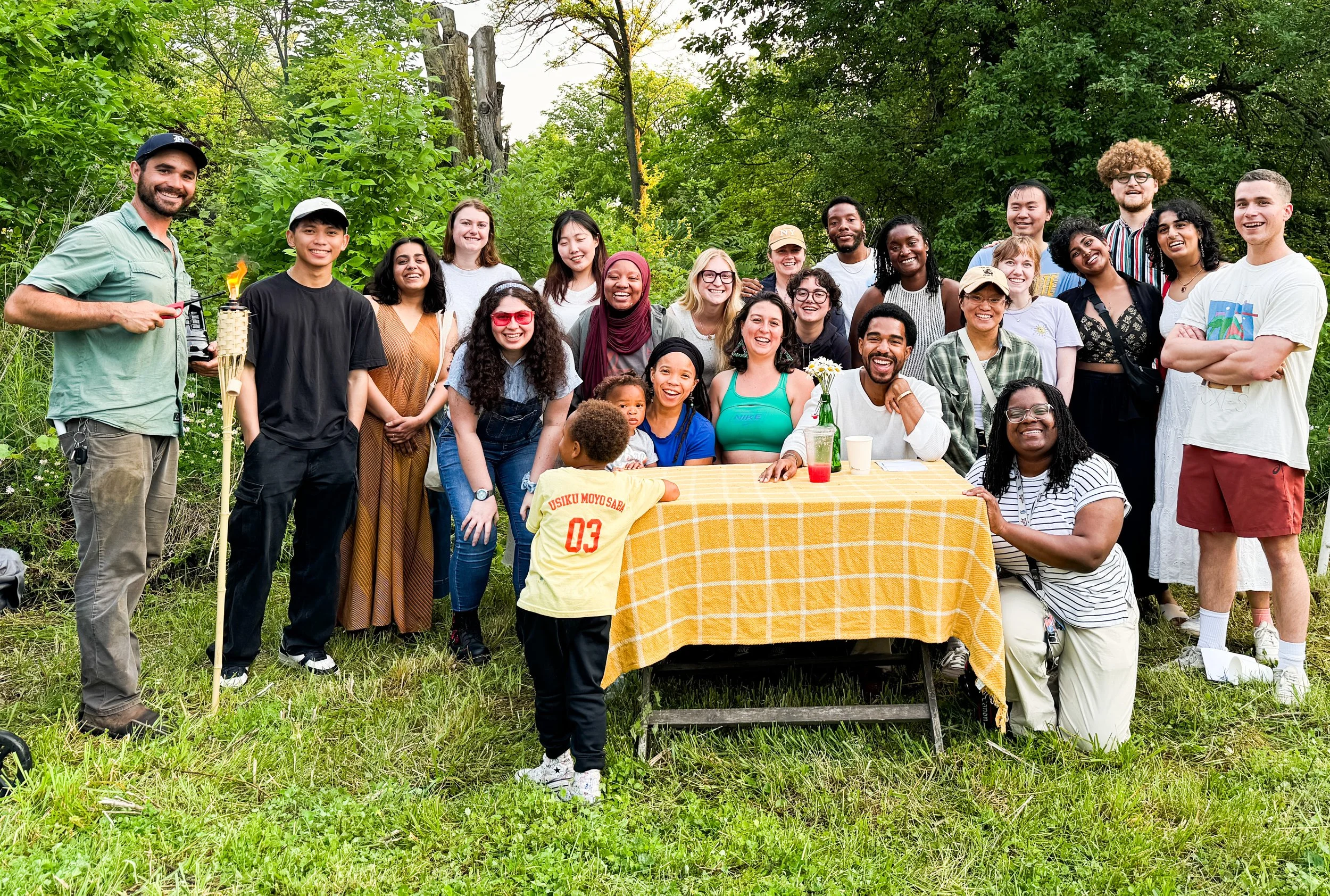
What keeps me doing this work is love — for people, for the land, and for all lifeforms. I carry a deep empathy and the wisdom to know that if we don’t care for the planet, our own existence will cease to exist. These values guide me personally, and they align with the mission of Sanctuary Farms. Over the years, there have been countless stories where people have expressed their gratitude and appreciation for the impact of our work, and admittedly, there have also been times when others undervalued or did not see its importance. Regardless, our commitment remains the same: we are working in partnership with our human and ecological communities to restore and rehabilitate soil that has long suffered from extraction and degradation, primarily due to anthropogenic impacts. That intersection of personal conviction and collective purpose is what keeps me rooted and moving forward in this work.
What is the biggest barrier right now to achieving your mission or vision?
The biggest barrier right now is access to the scale of resources and infrastructure needed to match the urgency of our work. Sanctuary Farms is deeply committed to closing the food loop and restoring soil health, but building out the systems for large-scale composting, distribution, and education in Detroit requires sustained investment, equitable land access, and supportive policy frameworks. Too often, our work is undervalued or seen as secondary, even though healthy soil and waste reduction are foundational to resilient communities. Despite these challenges, we continue to push forward in partnership with our neighbors and our ecological community, knowing that transforming extractive systems into regenerative ones is both necessary and possible.
What is a common misconception about food/organic waste reduction?
A common misconception about food and organic waste reduction is to see it only as a technical problem of waste management, rather than a reflection of our broken relationship with the earth. From a deep ecology perspective, there is no such thing as “waste” in the natural world — everything is part of a continuous cycle of renewal. When we treat food and organics as disposable, we deny this ecological truth and continue a pattern of extraction and degradation. The deeper work is not just diverting organics from landfills, but restoring our sense of kinship with soil, water, plants, and all lifeforms. Composting, in this sense, is more than a practice — it is an ethic of reciprocity, a way of giving back to the land that sustains us.
What is the most impactful thing that state, local, or federal policymakers could do right now to scale up food and organic waste reduction efforts?
The most impactful thing policymakers could do right now is to create policies that truly support decentralized composting models as a vital part of our food system. While there is city and state support for composting in principle, Detroit has not updated its definition of composting to include decentralized composting methods like community-scale operations. At the same time, the administration has been resistant to expanding the city’s role in handling organics, which limits innovation and equity in this space. What we need are mavericks inside city government — leaders who are willing to champion composting and broader environmental justice initiatives. From a deep ecology perspective, this is not just about managing materials; it is about restoring our relationship with the earth and ensuring our communities can become more resilient and regenerative in the face of climate and social challenges
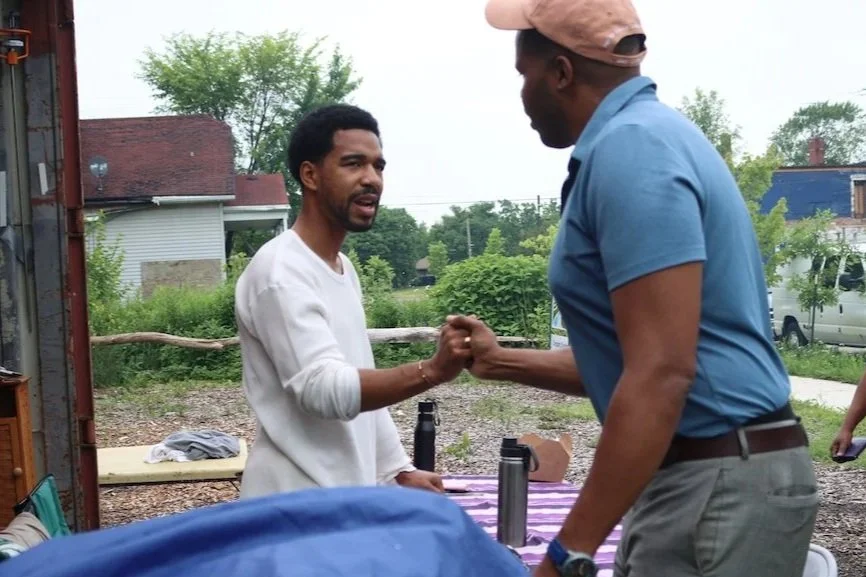
“At Sanctuary Farms, composting is more than a process — it is a praxis for ecological reparative justice and deep ecology. We are challenging the dominant culture of waste, which labels materials as unredeemable and unworthy, and showing that nothing in nature is truly disposable.”
If we are successful in our shared mission, what does Michigan/the U.S. look like in 10 years?
If we are successful in our mission, in 10 years Michigan — and the U.S. as a whole — will be radically more resilient and regenerative. Organic materials will no longer be treated as “waste” but recognized as part of the life cycle, with composting systems embedded in every community. Soils that were once degraded by extraction and pollution will be healthier and more alive, supporting abundant local food systems and strengthening ecological balance. Cities like Detroit will embrace community-scale composting as a cornerstone of environmental justice, with policies and infrastructure that prioritize both people and the planet. At the national level, greenhouse gas emissions will be reduced, landfills will shrink, and human and ecological communities will thrive together. We will have taken meaningful steps toward repairing our relationship with the earth, honoring interdependence, and building a culture that sees regeneration not as an option, but as a responsibility.
Is there anything else you’d like to share about your work?
What I want to share is that at Sanctuary Farms, composting is more than a process — it is a praxis for ecological reparative justice and deep ecology. We are challenging the dominant culture of waste, which labels materials as unredeemable and unworthy, and showing that nothing in nature is truly disposable. Organic matter has a vital role to play: it can return to the earth, restore life, and generate energy for the next stage of growth and regeneration. Through this approach, it's a reciprocal process that teaches our communities and ourselves to see value in what has been discarded, to honor the cycles of life, and to actively participate in repairing the ecological and social systems that have been degraded by extraction and neglect.
